
The Cost of Capital
Most real estate investors can quote their cap rate and cash-on-cash return to the decimal. But ask them what it costs to access the money they use to buy, fix, or hold properties? Crickets. The cost of capital — where the money comes from and who profits from it — is the blind spot that's costing smart investors more than they realize.
Everyone Wants a Return. Almost No One Counts the Cost.
When I talk to real estate investors, they tell me their cap rate, their cash-on-cash return, their depreciation schedule — down to the decimal.
But ask them what it costs to access the money they use to buy, fix, or hold those properties?
Crickets.
Not the interest rate. Not the origination fee. The cost of capital — where the money comes from, what it costs to get your hands on it, and who profits from that cost every single time you need it.
That blind spot is expensive. And it's why a lot of smart investors work harder than they need to.
The Return ON Capital vs. The Cost OF Capital
Let me make this concrete.
Say you own a rental property. The HVAC goes out. Twenty-five thousand dollars, gone. You need the money now.
Most investors have three moves:
Bank loan or line of credit. Paperwork. Underwriting. Appraisals. Weeks of waiting. Oh, and they want a lien on your property.
HELOC on your primary residence. Now your family's home is collateral for a rental property expense. Sleep well.
Pull from a retirement account. Taxable event. Penalties if you're under 59½. And that money stops working for you the moment you withdraw it.
Here's what nobody tells you: every one of those options has a cost beyondthe stated interest rate. Time. Control. Opportunity. Tax friction. And the quiet fact that someone else is making money off your need.
You focused on the return on your capital — the property, the cash flow, the appreciation.
You ignored the cost of your capital — the financing engine that makes the whole thing go.
The Renovation That Costs More Than You Think
Let's scale it up. You find a property that needs $75,000 in renovation. You run the numbers. After repair value looks strong. You can force appreciation and pull equity out in six months.
You go to a hard money lender. Twelve percent interest, three points upfront, six-month term. You do the math: "I can handle that."
But can you?
What if the contractor runs long? What if the market shifts and the refinance appraisal comes in low? What if you're forced to sell into a soft market because the loan is due?
The cost of that capital wasn't just 12%. It was the stress, the inflexibility, and the risk of losing control of the timeline.
The return on the deal looked great. The cost of the capital almost wiped it out.
There's Another Way to Finance — And You've Probably Never Considered It
I'm an Authorized IBC Practitioner, trained by the Nelson Nash Institute. I teach a concept called the Infinite Banking Concept — using a properly structured, dividend-paying whole life insurance policy as a private financing engine.
Here's what that means in plain English.
Instead of building your capital in a bank account or a retirement plan where you have to beg permission to use it, you build it inside a mutual life insurance policy designed for high early cash value.
When you need capital — for the HVAC, the renovation, the next property — you don't withdraw it. You borrow against it. With a non-direct recognition policy, the insurance company is structured to credit dividends on the full cash value — including the portion you've borrowed against — as if you never touched it. Dividends are not guaranteed; they are declared annually by the company's board. However, the mutual companies most commonly used for IBC have paid dividends without interruption for over a century.
Your money keeps growing. And you use it simultaneously.
That is not a gimmick. That is the mechanics of a specific type of dividend-paying whole life policy, structured correctly, with a mutual company that has paid dividends for over a century.
What "Be Your Own Banker" Actually Means
Nelson Nash, who created the Infinite Banking Concept, didn't mean you open a branch and start writing mortgages for strangers.
He meant this: stop giving away the financing function to banks and institutions. Capture it yourself.
Every time you finance a car, a renovation, or a property through traditional means, you pay interest to someone else. Over a lifetime, that interest is staggering — and most people never see it because it leaks out in small drips.
With a properly structured policy, you become the lender and the borrower. You repay the loan on your own schedule. You set the pace — there are no required repayment timelines built in. No credit check. No underwriting. No lien on your property. No taxable event under current tax law (tax treatment depends on your individual circumstances; consult a qualified tax advisor).
The policy doesn't replace your investments. It replaces the broken financing system you've been using to fund them.
The Question That Changes Everything
I don't care what your return on capital is if your cost of capital is eating you alive.
A 15% return on a real estate deal sounds fantastic. But if you're financing it with high-interest debt, taxable withdrawals, or equity lines that put your home at risk, your net result is a fraction of what you think it is.
And the worst part? Most people never run the math. They celebrate the return and ignore the financing cost.
Many high-net-worth individuals and family offices understand that wheremoney comes from matters as much as where it goes. They build private pools of capital they control. They finance their own opportunities on their own terms.
You can do the same. It takes discipline. It takes a long-term view. And it takes a willingness to look at your finances differently than the Wall Street playbook taught you.
Start With the Right Question
Stop asking, "What's my rate of return?"
Start asking, "What does it cost me to use my own money — and who profits when I need it?"
If you don't like the answer, there's a different system. One that's been around for over 200 years, built on contractually guaranteed minimums and a track record of uninterrupted dividend payments spanning over a century — designed for people who are done being lied to by institutions and ready to take control of their own capital.
I'm Sherman Paul Horsley, The Financial Prodigy. If you want to understand how this works for your specific situation, book a consult. I'll show you the math — no hype, no pressure, just the truth about what your capital is actually costing you.
SHERMAN PAUL HORSLEY is an Authorized Infinite Banking Concept Practitioner, licensed life insurance professional, and author of Why the Rich Don't Die Broke: The Financial Prodigy's Secret of the Wealthy.
This article is for educational purposes only and does not constitute financial, tax, or legal advice. Consult with qualified professionals for guidance specific to your situation.
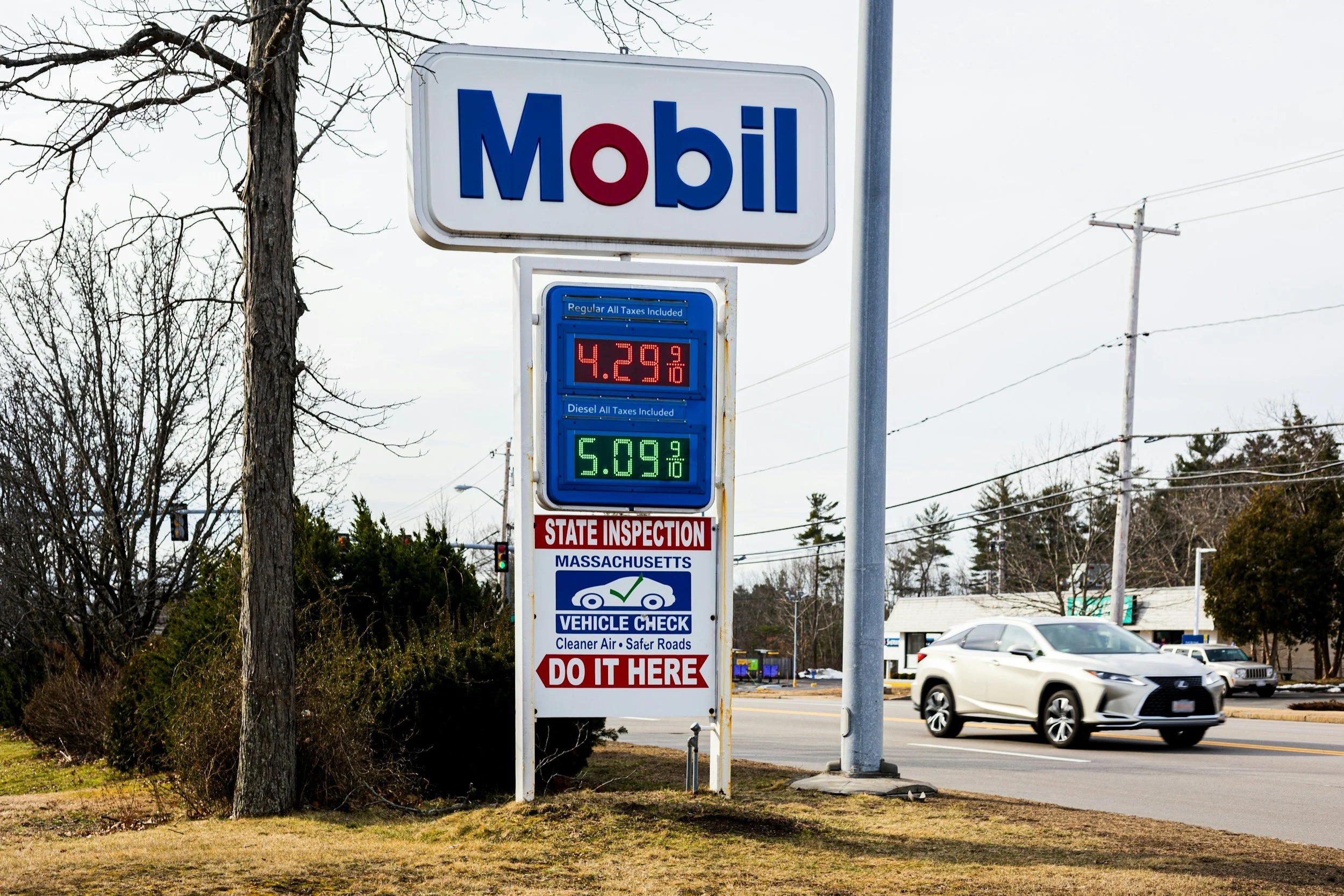
What Is Inflation, What Is Deflation, and How Do They Affect the Value of the Dollar?
Inflation is when prices go up and your purchasing power goes down. Deflation is when prices go down and your dollar buys more — but it can crush economies. Both threaten your wealth, and most people have no idea how to protect themselves from either.
The following is for educational purposes only and does not constitute financial, tax, or investment advice. Consult a qualified professional before making financial decisions.
Your Money Is Shrinking Right Now
Let me ask you something. When you were a kid, how much did a candy bar cost? A quarter? Fifty cents? Go to the gas station today and try to buy one for under two bucks. Good luck.
That, my friend, is inflation. And it's not some abstract economic theory debated by people in suits on cable news. It's a tax you didn't vote for, collected silently, every single day.
But here's the thing most "financial experts" won't tell you: inflation isn't the only threat to your money. Its evil twin, deflation, can be just as dangerous — and in some ways, worse. If you don't understand both, you're flying blind with your financial future.
Today, I'm going to break down exactly what inflation and deflation are, why they happen, and — most importantly — what they mean for the dollars sitting in your bank account, your 401(k), and your wallet right now.
Let's get into it.
What Is Inflation? (The Silent Thief)
Inflation is simple: it's when prices go up, and your purchasing power goes down. A dollar today buys less than a dollar did yesterday. That's it.
The government measures inflation using something called the Consumer Price Index, or CPI. They track a "basket of goods" — food, gas, housing, medical care, education — and tell you how much more expensive that basket got over the past year.
Here's what they won't tell you: the official CPI number is a fantasy.
The Bureau of Labor Statistics has changed how it calculates inflation multiple times over the decades. They use tricks like "hedonic adjustments" and "substitution bias" to make the number look lower than what you actually feel at the grocery store. If steak gets too expensive, they assume you'll buy chicken instead. Presto — inflation didn't go up as much!
But you know what? You still can't afford the steak.
If you use the same methodology the government used in 1980, real inflation has been running much higher than the official numbers for years. Some economists estimate it's been in the 5-10% range consistently, with spikes well into the teens during certain periods.
Let that sink in. If inflation is really 7%, and your savings account pays you 0.5%, you're losing 6.5% of your money every single year. Compounded over a decade, that's not a loss — that's a massacre.
Why Does Inflation Happen?
There are a few drivers of inflation, and you need to understand all of them because they're all happening right now.
1. Money Printing (The Big One)
When the Federal Reserve creates trillions of dollars out of thin air — which they've done repeatedly, especially since 2008 and again during COVID — they're not creating wealth. They're diluting the value of every dollar already in circulation.
Think of it like this: imagine you have a pizza, and there are eight slices. Now imagine someone waves a magic wand and suddenly there are sixteen slices. Did the pizza get bigger? No. Each slice just got smaller. That's what happens to your dollars when the Fed prints money.
Since 2020 alone, the M2 money supply increased by roughly 40%. Your dollars didn't become 40% more valuable. Prices did.
2. Supply Chain Disruptions
When goods are harder to get — whether because of pandemics, wars, trade restrictions, or shipping bottlenecks — prices go up. Basic supply and demand. Fewer goods + same amount of money = higher prices.
3. Government Spending and Debt
The U.S. national debt is now over $35 trillion. Let me write that out for you: $35,000,000,000,000. We add roughly a trillion dollars in new debt every 100 days or so. At some point, that debt has to be serviced, and one way governments historically deal with massive debt is by inflating it away.
If they can make the dollar worth less, the debt they owe becomes easier to pay back. It's a hidden default, and you're the one paying for it.
4. Wage-Price Spirals
When workers demand higher wages to keep up with rising prices, and companies raise prices to cover higher wages, you get a feedback loop. This is what happened in the 1970s, and many economists worry we're heading down that road again.
What Is Deflation? (The Trap Nobody Talks About)
Now let's flip the script. Deflation is when prices go down and the purchasing power of your dollar goes up. Sounds great, right? Who doesn't want cheaper stuff?
Not so fast.
Deflation is economically devastating, and here's why: when people expect prices to keep falling, they stop spending. Why buy a car today for $30,000 when you can buy it next year for $28,000? So they wait. And when everyone waits, businesses stop selling. When businesses stop selling, they lay people off. When people get laid off, they spend even less. It's a death spiral.
The Great Depression was a deflationary spiral. Japan has been fighting deflation and stagnation since the 1990s. It's a nightmare to escape from.
During deflation, debt becomes more expensive in real terms. If you owe $100,000 on a mortgage and deflation makes your wages fall, that $100,000 becomes harder and harder to pay back. Meanwhile, the asset you bought — your house — might be falling in value too. You're underwater on a debt that's getting heavier by the day.
So while inflation steals from savers, deflation crushes borrowers and can destroy entire economies.
The Fed's Impossible Balancing Act
The Federal Reserve is supposed to keep inflation at around 2% — the "Goldilocks zone." Not too hot, not too cold. But here's the truth: they don't really control inflation. They influence it, sometimes poorly.
When inflation runs hot, the Fed raises interest rates to slow down borrowing and spending. When the economy looks shaky, they cut rates and print money to stimulate it. But they're always behind the curve. They're driving by looking in the rearview mirror.
And here's the dirty secret: the Fed wants moderate inflation. They target 2% because a little inflation keeps people spending, keeps debt manageable, and gives them room to maneuver. But once that genie gets out of the bottle — once inflation expectations become unanchored — it's very hard to put back in.
We saw this in 2021-2022 when the Fed called inflation "transitory" while it was ripping to 40-year highs. By the time they raised rates aggressively, the damage was done. Your grocery bill, your rent, your gas — all permanently higher.
What This Means for Your Money
Okay, enough economics class. Let's talk about what actually matters: your financial life.
Cash in the Bank Is a Losing Bet
If you have $50,000 sitting in a savings account earning 0.5% interest, and real inflation is 5-7%, you're losing $2,500 to $3,500 in purchasing power every single year. In ten years, that $50,000 might still say $50,000 on your statement, but it'll buy what $30,000 buys today.
The banks love this. They take your deposits, lend them out at 7-8%, pay you almost nothing, and pocket the spread. You're literally financing their profits while your wealth evaporates.
Your 401(k) Isn't Safe Either
Most 401(k)s are loaded with mutual funds tied to the stock market. Stocks can be an inflation hedge over very long periods, but they get hammered in the short term when inflation spikes and the Fed raises rates. Remember 2022? The S&P 500 dropped nearly 20% while inflation was raging.
And if you're in bonds? Inflation destroys bond values. When rates go up, bond prices go down. It's math.
Plus, most 401(k)s are tax-deferred. You think you're saving on taxes now, but you're just kicking the can down the road. If tax rates go up — and with $35 trillion in debt, they almost certainly will — you'll pay more in taxes later on money that's worth less. It's a double whammy.
Real Estate Can Help, But It's Not Perfect
Real estate is often touted as an inflation hedge, and it can be — if you own the right property in the right location with the right financing. But property taxes go up with inflation. Maintenance costs go up. Insurance goes up. And if deflation hits, real estate values can crater just like everything else.
It's not a magic bullet.
Gold and Silver — The Old Standbys
Precious metals have been stores of value for thousands of years. When currencies collapse, gold tends to hold its purchasing power. But gold doesn't pay you any income. It just sits there. And in a deflationary environment, even gold can fall in price as people sell assets to raise cash.
Gold is insurance, not an investment strategy.
Bitcoin — Digital Gold for the Modern Era
Let me be clear about something before we go any further: when I talk about Bitcoin, I'm not talking about "crypto." I'm talking about Bitcoin specifically — BTC. There's Bitcoin, and then there's everything else. The thousands of other cryptocurrencies are not the same thing, and most of them will eventually be worth zero. Bitcoin is unique, and understanding that distinction matters.
So what makes Bitcoin different? For starters, there will only ever be 21 million bitcoins. No government can print more. No central bank can dilute the supply. The code is open-source, the network is decentralized, and no single entity controls it. That fixed supply is what makes people compare it to gold — it's scarce by design.
Bitcoin is a digital store of value. Like gold, it doesn't pay dividends or interest. It just sits there, holding purchasing power over time. But unlike gold, you can move millions of dollars across borders in minutes, verify ownership instantly, and store it securely without a vault or a middleman.
Now, let's be honest about the risks. Bitcoin is volatile. It can drop 20% in a week and rally 50% the next month. That volatility scares people, and it should — if you're speculating with money you can't afford to lose. But over longer timeframes, the trend has been unmistakable. More corporations are holding it on their balance sheets. Institutional investors are allocating to it. Countries are exploring it as legal tender. Adoption is growing, even if the price swings make headlines.
Here's where I land on this: Bitcoin is not a replacement for the Infinite Banking Concept. It's not a substitute for guaranteed growth, tax-advantaged cash value, or the liquidity and protection that whole life insurance provides. What it is — or can be — is a complementary piece of a diversified approach. A hedge against currency debasement, held outside the traditional financial system, with properties that no government can inflate away.
I track Bitcoin closely. Not because I'm day-trading it, but because understanding what's happening in the BTC market helps me see the bigger picture of how people are responding to monetary policy, debt levels, and the declining faith in fiat currencies worldwide.
If you're curious about Bitcoin, do your homework. Learn how self-custody works. Understand the risks. And never put money into it that you need for your foundational financial system. But don't dismiss it out of hand, either. The same people who laughed at it at $100 were quiet at $10,000, and they're really quiet now.
The Real Solution: Control What You Can Control
Here's the hard truth: you can't stop inflation. You can't stop the Fed from printing money. You can't stop Congress from spending trillions they don't have. You can't control the global economy.
But you can control your own financial system.
This is why I'm such a passionate advocate for the Infinite Banking Concept. When you build your own banking system using properly structured whole life insurance, you create a financial foundation that is:
Guaranteed to grow — regardless of what the stock market does
Tax-advantaged — grow your money without the IRS taking a cut every year
Liquid — access your cash value when you need it, without penalties or market timing
Protected from creditors — in most states, cash value in life insurance is shielded
Generational — it doesn't die with you; it transfers to your family
Most people are told to hand their money over to Wall Street, cross their fingers, and hope for the best. The insiders? They build systems that guarantee growth, provide liquidity, and protect against the very inflation and volatility that destroy ordinary people's wealth.
You don't need to be an economist to see what's coming. You just need a better plan than "hope and pray."
The Bottom Line
Inflation and deflation are two sides of the same coin: the destruction of purchasing power and the destabilization of your financial life. The dollar in your pocket is not a store of value. It's a melting ice cube, and the temperature is rising.
The question isn't whether inflation or deflation will hurt you. The question is: what are you going to do about it?
Most people will do nothing. They'll keep their money in the bank. They'll keep funding their 401(k) and hoping the market cooperates. They'll keep trusting the same system that's been rigged against them for decades.
But you're not most people. You're reading this because you know there's a better way.
The wealthy don't panic about inflation because they don't keep their wealth in dollars. They own assets. They control cash flow. They build systems that work regardless of what the Fed does next.
You can do the same. It starts with understanding the game — and then choosing not to play by their rules.
Ready to Build a Financial System That Protects You From Inflation?
If you're tired of watching your purchasing power disappear and you're ready to learn how the wealthy protect and grow their money — regardless of what the dollar does next — I want to talk to you.
Click here to schedule a free strategy session and let's build a financial foundation that puts you in control.
The Financial Prodigy helps individuals and families build tax-advantaged, guaranteed-growth financial systems using the Infinite Banking Concept. Past performance does not guarantee future results. Consult a qualified tax and insurance professional before making financial decisions.
What Is Fractional Reserve Banking?
Fractional reserve banking is the system where banks keep only a fraction of your deposits on hand and lend out the rest — creating new money in the process. It means most of the money in the economy doesn't exist as physical cash. It exists as debt. And that has massive implications for your financial life.
The Short Answer
Fractional reserve banking is the system where banks keep only a fraction of your deposits on hand and lend out the rest — creating new money in the process. It means most of the money in the economy doesn't exist as physical cash. It exists as debt. And that has massive implications for your financial life.
You walk into a bank and deposit $10,000. You assume the bank puts that money in a vault, keeps it safe, and gives it back when you ask.
That's not what happens.
The bank keeps a small fraction — maybe $1,000 — and lends out the other $9,000. That $9,000 gets deposited in another bank, which keeps 10% and lends out $8,100. Which gets deposited in another bank, which lends out $7,290. And on it goes.
By the time the chain is done, your original $10,000 deposit has become $100,000 in the banking system. Ninety thousand dollars was created out of thin air. It doesn't exist as cash. It exists as loans. As debt.
This is fractional reserve banking. It's how modern money is created. And if you don't understand it, you don't understand how the financial system actually works — or why Infinite Banking Concept is such a powerful alternative.
How It Actually Works
The Reserve Requirement
Banks are required to keep a certain percentage of deposits as reserves. Historically, this was around 10%. In March 2020, the Federal Reserve reduced the reserve requirement to zero for most banks. That's not a typo. Banks are now required to keep zero percent of your deposits on hand.
In practice, banks still keep some reserves for operational purposes and regulatory expectations. But legally? They can lend out every dollar you deposit.
The Money Multiplier
Here's the mechanics. Let's use the old 10% requirement as an example:
1. You deposit $10,000 at Bank A
2. Bank A keeps $1,000 in reserve, lends $9,000 to a borrower
3. That borrower spends the $9,000, which gets deposited at Bank B
4. Bank B keeps $900 in reserve, lends $8,100 to another borrower
5. That $8,100 gets deposited at Bank C, which lends $7,290
6. The cycle continues
After 10 rounds of lending, the original $10,000 has created approximately $90,000 in new money. The total money supply is now $100,000 — your original deposit plus $90,000 in loans.
This is called the money multiplier effect. And it's not a theory. It's how the banking system operates every single day.
Where the Money Comes From
Here's the part that surprises most people: banks don't lend out existing deposits. They create new money when they make loans.
When a bank approves your mortgage, it doesn't go to the vault, count out $300,000 in cash, and hand it to you. It creates a new deposit in the seller's account. That $300,000 didn't exist before the loan was made. The bank created it with a few keystrokes.
This is legal. It's how the system is designed. And it means that most money in circulation is debt. If all debts were paid off, most of the money supply would disappear.
Think about that. Money and debt are essentially the same thing in our system. The money in your checking account is someone else's loan. Your mortgage created the money that now sits in someone else's account.
Why Banks Do This
Profit
Banks make money on the spread. They pay you 0.5% on your savings account (if you're lucky) and charge borrowers 6% on mortgages, 8% on car loans, 20% on credit cards. They keep the difference.
When they can create money out of nothing and charge interest on it, the profit potential is enormous. That's why banking is one of the most profitable industries in history.
Economic Growth
Fractional reserve banking expands the money supply, which enables more lending, more investment, more economic activity. In theory, this creates jobs, builds businesses, and raises living standards.
And it has. Modern economies have grown enormously under this system. But the growth comes with costs: inflation, debt bubbles, financial instability, and wealth concentration.
Government Financing
Governments love fractional reserve banking because it enables deficit spending. When the government runs a trillion-dollar deficit, it issues bonds. Banks buy those bonds, creating money to do so. The government spends that money into the economy. The money supply expands. And the debt becomes part of the permanent money supply.
This is how governments finance wars, social programs, and everything else without raising taxes directly. They borrow newly created money and let inflation tax everyone indirectly.
The Problems With Fractional Reserve Banking
Inflation
Every new loan creates new money. More money chasing the same amount of goods and services means higher prices. This isn't a bug. It's a feature.
Since the Federal Reserve was created in 1913, the dollar has lost about 97% of its purchasing power. Since going off the gold standard in 1971, it's lost about 87%. This is the direct result of continuous money creation through fractional reserve banking and central bank policy.
Your savings are being diluted. Your wages buy less. And the people who get the new money first — banks, government contractors, large corporations — benefit before prices adjust.
Financial Instability
Fractional reserve banking creates boom-bust cycles. When credit is easy, money floods the economy. Asset prices rise. People feel wealthy. They borrow more, spend more, speculate more.
Then something spooks the system. A bank fails. A bubble pops. A pandemic hits. Confidence evaporates. Banks stop lending. The money supply contracts. Businesses fail. People lose jobs. Homes go into foreclosure.
This has happened repeatedly: 1929, 1987, 2000, 2008, 2020. Each time, the banking system created too much money, inflated asset bubbles, and then collapsed when the debt couldn't be sustained.
And each time, ordinary people paid the price while banks got bailed out.
Wealth Concentration
The banking system transfers wealth from the many to the few.
When banks create money and lend it, they charge interest. That interest flows to bank shareholders, executives, and bondholders. Over decades, this compounds into enormous wealth concentration.
Meanwhile, the people paying the interest — mortgage holders, credit card users, student loan borrowers — see their wealth slowly drained. They work harder, earn more, but never seem to get ahead. That's not an accident. It's the design.
The top 1% owns more wealth than the bottom 90% combined. That gap has widened dramatically since the end of the gold standard. Fractional reserve banking isn't the only cause, but it's a major one.
Moral Hazard
Banks know they'll be bailed out if they fail. The 2008 crisis proved this. Banks made reckless loans, packaged them into securities, sold them to investors, and when everything collapsed, taxpayers footed the bill.
This creates moral hazard. Banks take bigger risks than they would if they faced real consequences. They privatize profits and socialize losses. You get the bill.
The Bank Run Problem
Remember: banks don't keep your deposits. They lend them out. So what happens if everyone wants their money at once?
A bank run.
The bank can't fulfill all withdrawal requests because the money doesn't exist. It's been lent out, spent, re-deposited, and re-lent. The bank has assets (loans), but not liquid cash. If depositors panic, the bank fails.
This is why we have deposit insurance — the FDIC guarantees deposits up to $250,000. But the FDIC doesn't have enough money to cover all deposits if multiple banks fail simultaneously. In a systemic crisis, the government would have to create new money to cover the shortfall, which would cause more inflation.
Your "safe" bank deposit is only safe because of government promises. And those promises are backed by the same money-creation machine that causes the problems in the first place.
How This Connects to IBC
Now we get to the part that matters for your financial life.
Fractional reserve banking is the system that enriches banks at your expense. It creates the inflation that erodes your savings. It enables the debt that traps you in monthly payments. It produces the boom-bust cycles that wipe out your retirement accounts.
Infinite Banking Concept is how you opt out.
You Become the Bank
With IBC, you don't deposit your money in a fractional reserve bank and hope they don't fail. You build cash value in a properly designed whole life insurance policy with a mutual insurance company.
Mutual insurance companies are not banks. They don't practice fractional reserve banking. They don't create money out of thin air. They collect premiums, invest conservatively, maintain substantial reserves, and pay claims from those reserves.
When you need money, you don't withdraw your cash value and lose the growth. You borrow against it. The insurance company uses its general account — built from actual premiums and conservative investments — to provide the loan. Your cash value continues growing uninterrupted.
You're not depending on a leveraged, fragile banking system. You're depending on a contract with a company that has survived every financial crisis for over a century.
You Capture the Interest
In the fractional reserve system, banks create money, lend it to you, and collect the interest. You pay them for the privilege of using money they created from nothing.
With IBC, when you borrow against your policy, you pay interest to the insurance company. But your cash value is also earning guaranteed growth and dividends. Over time, the growth on your cash value can exceed the interest on your loan.
More importantly, you control the repayment. You set the schedule. You decide the amount. If business is slow, you pay less. If you have a windfall, you pay more. Try telling your mortgage company you'll pay less this month because revenue is down. See how that goes.
You Protect Against Inflation
Fractional reserve banking creates inflation by expanding the money supply. Your cash savings lose purchasing power every year.
A properly designed whole life policy provides guaranteed cash value growth — typically 3-4% plus dividends. While banks pay you 0.5% on savings, your policy grows faster than inflation in normal environments. And the tax advantages mean you keep more of that growth.
It's not a perfect inflation hedge. Nothing is. But it's far better than keeping wealth in cash that's being actively debased.
You Build a Foundation Outside the Banking System
Your 401(k) is held by a custodian. Your checking account is at a bank. Your mortgage is with a lender. Your credit card is with another bank.
Every one of those institutions practices fractional reserve banking. Every one of them is leveraged, regulated, and vulnerable to systemic risk.
Your whole life policy is a contract with a mutual insurance company. It's not a bank deposit. It's not a security. It's not dependent on the fractional reserve system. It exists alongside that system, providing stability when the system wobbles.
In 2008, when banks failed and the stock market crashed 57%, whole life cash values kept growing. Policy loans were still available. Death benefits were still paid. The system worked because it wasn't part of the leveraged banking casino.
The Alternative: Full Reserve Banking
Some economists advocate for full reserve banking — where banks keep 100% of deposits on hand and can't create money through lending. This is how many people think banking already works. It doesn't.
Under full reserve banking, banks would be true safekeeping institutions. You'd pay them a fee to hold your money, and they'd give it back when you asked. No lending. No money creation. No boom-bust cycles.
But this would also mean far less credit available. Mortgages would be harder to get. Business loans would require actual savings, not newly created money. Economic growth would likely be slower but more stable.
Full reserve banking isn't coming anytime soon. The current system benefits too many powerful interests. Governments, banks, and large corporations all profit from money creation. They're not going to give it up voluntarily.
IBC and the Full Reserve Model
Here's what most people don't know: mutual life insurance companies — the ones that issue the policies used for Infinite Banking — operate on principles that look a lot like full reserve banking.
When you pay premiums into a properly designed whole life policy, that money doesn't get lent out ten times over. It goes into the company's general account, backed by real assets — bonds, mortgages, real estate, and other conservative investments. Every dollar of your cash value is supported by actual reserves. Not promises. Not keystroke-created money. Real assets.
Mutual insurance companies are required by law to maintain substantial reserves. They can't create money out of thin air. They can't lend out money they don't have. They operate with a level of conservatism that would make fractional reserve bankers laugh — until the next crisis hits.
In 2008, when banks were failing and the financial system was freezing, mutual life insurance companies kept paying claims, kept honoring policy loans, and kept growing cash values. In 2020, when the economy shut down and the stock market crashed, they did the same. They've done it through every panic, every recession, every war, every pandemic — for over a century.
Why? Because they're not running a leveraged casino. Your cash value isn't a claim on money that got lent out to a subprime borrower in Florida. It's a contractual obligation backed by a pool of real assets, managed conservatively, and protected by state guaranty associations.
The policyholder's cash value is always there. Always liquid. Always growing. You can borrow against it at any time, for any reason, with no credit check and no application process. Try getting that kind of access and reliability from a fractional reserve bank during a crisis.
This is the contrast: your bank deposit is a promise — a promise from a leveraged institution that lent out your money and hopes you'll never all ask for it back at once. Your cash value is a contract — a contract with a company that keeps 100% reserves and has honored its obligations through depressions, wars, and financial meltdowns.
You don't have to wait for full reserve banking to come to the banking system. It already exists in the insurance system. And IBC is how you access it.
What You Can Do
Understanding fractional reserve banking changes how you think about money.
Here are practical steps:
Minimize bank deposits. Keep enough for monthly expenses and emergencies, but don't store wealth in checking and savings accounts that earn nothing while losing value to inflation.
Pay down high-interest debt. Every dollar you owe to a bank is a dollar you pay interest on — interest that enriches the banking system at your expense. Eliminate credit card debt, then car loans, then other consumer debt.
Build equity in real assets. Real estate, businesses, precious metals. Things that have value independent of the banking system.
Consider IBC as a financial foundation. A properly designed whole life policy provides guaranteed growth, liquidity, tax advantages, and protection outside the fractional reserve system.
Diversify. No single tool solves everything. But having a portion of your wealth in a system that doesn't depend on bank lending and money creation provides valuable stability.
Bottom Line
Fractional reserve banking is how modern money is created. Banks don't keep your deposits. They lend them out, create new money, charge interest on it, and keep the profits. This system creates inflation, financial instability, and wealth concentration.
You can't opt out entirely. You still need a checking account. You might still need a mortgage. But you don't have to keep all your wealth in a system designed to transfer it from you to banks.
Infinite Banking Concept lets you become your own banker. Build cash value. Borrow against it when needed. Pay yourself back. Capture the interest. Grow your wealth outside the fractional reserve casino.
The wealthy have been doing this for generations. Not because they're smarter than you. Because they understand how the system works — and they refuse to be on the losing end of it.
Ready to Build Your Own Banking System?
If you want to explore how Infinite Banking Concept can provide a foundation outside the fractional reserve banking system, let's talk.
Book a consultation at The Financial Prodigy. I'll walk you through the mechanics, show you how properly designed policies work, and help you understand whether this makes sense for your situation.
No sales pitch. Just the straight truth about money, banking, and how to take back control.
Disclaimer: The information provided in this article is for educational purposes only and does not constitute financial, tax, or legal advice. SHERMAN PAUL HORSLEY is a licensed life insurance professional and authorized Infinite Banking Concept practitioner. He does not provide investment advice or securities recommendations. Descriptions of banking and monetary systems are educational summaries, not legal or regulatory analysis. Consult with qualified professionals regarding your specific situation before making any financial decisions. Policy loans accrue interest and reduce the death benefit if not repaid. Past performance of dividends is not indicative of future results.
What Is Fiat Currency?
Fiat currency is money that has value because a government says it does. Not because it's backed by gold. Not because it has intrinsic worth. Just because the government decrees it. And that matters more to your financial future than most people realize.
What Is Fiat Currency?
The Short Answer
Fiat currency is money that has value because a government says it does. Not because it's backed by gold. Not because it has intrinsic worth. Just because the government decrees it. And that matters more to your financial future than most people realize.
Pull a dollar bill from your wallet. Look at it.
What makes that piece of paper worth anything? You can't eat it. You can't build with it. If the government collapsed tomorrow, it wouldn't keep you warm or feed your family.
Yet you work 40, 50, 60 hours a week to get more of it. You trade years of your life for stacks of this paper. You stress about not having enough. You celebrate when you get a raise.
Here's the uncomfortable truth: that dollar has no intrinsic value. It's worth something only because the United States government says it is. And because enough people believe the government.
That belief system is called fiat currency. And understanding how it works — and more importantly, how it fails — is one of the most important things you can know about money.
What "Fiat" Actually Means
The word "fiat" comes from Latin. It means "let it be done" or "by decree." It's the same root as when someone says something happened "by fiat" — meaning by official order, not by natural process.
Fiat currency is money whose value is established by government declaration. The government prints it, declares it legal tender, and demands taxes be paid in it. That creates demand. People need dollars to pay taxes, so they accept dollars in exchange for goods and services.
But the government doesn't promise to exchange those dollars for gold, silver, or any commodity. The value isn't anchored to anything physical. It's anchored to trust.
Trust in the government. Trust in the central bank. Trust that tomorrow, someone else will accept those same dollars for their goods and services.
When that trust breaks, the currency breaks. History is full of examples.
A Brief History of Money
To understand fiat, you need to understand what came before it.
Commodity Money
For most of human history, money was something with intrinsic value. Gold. Silver. Salt. Cattle. These things were valuable whether or not a government said so. You could use gold to make jewelry, conduct electricity, or store wealth. It was money because it was useful and scarce.
Representative Money
Eventually, carrying gold around became impractical. So governments issued paper notes that could be redeemed for a fixed amount of gold or silver. The paper itself was worthless, but it represented something valuable.
The United States operated on this system for most of its history. The dollar was backed by gold. You could take your paper money to a bank and exchange it for actual gold coins or bars.
The Gold Standard
From 1879 to 1933, the U.S. was on a domestic gold standard. Anyone could redeem dollars for gold. Then Franklin D. Roosevelt made private gold ownership illegal in 1933, requiring Americans to turn in their gold for paper dollars.
From 1944 to 1971, the Bretton Woods system made the dollar the world's reserve currency, backed by gold at $35 per ounce. Other countries pegged their currencies to the dollar, and the dollar was pegged to gold.
The Fiat Era
Then, on August 15, 1971, Richard Nixon "temporarily" suspended the convertibility of dollars into gold. The temporary measure became permanent. The dollar became a fiat currency — backed by nothing but government promise.
Every major currency in the world followed suit. Today, there is no major currency backed by gold or any commodity. It's all fiat. All trust-based. All vulnerable to the same forces.
How Fiat Currency Actually Works
Creation
Fiat currency is created in two main ways:
Government spending: When the government spends more than it collects in taxes, it runs a deficit. It covers that deficit by issuing bonds — IOUs that promise to pay back with interest. The Federal Reserve can buy those bonds by creating new money electronically. That new money enters the banking system and expands the money supply.
Bank lending: When a bank makes a loan, it doesn't lend out existing deposits. It creates new money. The borrower gets a deposit (new money), and the bank gets a loan asset. This is called fractional reserve banking, and it's how most money is actually created. More on that in another article.
Control
Central banks — the Federal Reserve in the U.S. — control the money supply through interest rates, reserve requirements, and open market operations. They can create money, destroy money, and influence how much money banks can create.
This is enormous power. The people who control the money supply control the economy. They decide whether credit is cheap or expensive. Whether savings are rewarded or punished. Whether inflation runs hot or cold.
And here's the thing: they're not elected. The Federal Reserve Chair is appointed, not voted in. The Federal Open Market Committee makes decisions that affect every dollar in your pocket, and you have no direct say in who sits on that committee.
Inflation
This is where fiat currency hits your wallet.
When the money supply grows faster than the economy's production of goods and services, each dollar buys less. That's inflation. It's not rising prices — it's falling purchasing power.
Since 1971, when the dollar went fully fiat, the purchasing power of a dollar has fallen by about 87%. What $1 bought in 1971 takes about $7.50 to buy today. Your grandparents' savings, if kept in cash, lost most of their value.
This isn't an accident. It's a feature of the system. A little inflation encourages spending and borrowing. It erodes debt (including government debt). It transfers wealth from savers to borrowers.
The government is the world's biggest borrower. Inflation helps them. It doesn't help you.
Why Fiat Currency Matters to Your Financial Future
Your Savings Are Being Stolen
Not by a thief in the night. By mathematics.
If you keep money in a savings account earning 0.5% interest while inflation runs at 3%, you're losing 2.5% per year. Compounded over a decade, that's a 25% loss in purchasing power.
The bank pays you pennies while the Federal Reserve debases the currency. You're on the wrong side of the trade.
This is why "saving money" in the traditional sense doesn't work anymore. Your grandparents could put money in a savings account and watch it grow in real terms. You can't. The system is designed to punish cash savers.
Your Wages Don't Keep Up
Wages have stagnated for decades when adjusted for inflation. The official numbers say wages are up, but they measure inflation using metrics that understate the real cost of living. Housing, healthcare, and education have risen far faster than the Consumer Price Index suggests.
Meanwhile, the people closest to the money creation — banks, Wall Street, large corporations — get the newly created money first, before prices rise. By the time it reaches you, prices have already adjusted upward. This is called the Cantillon Effect, and it's one of the hidden wealth transfers in a fiat system.
Your Retirement Is at Risk
If you're counting on a fixed pension or a fixed dollar amount in retirement, you're in trouble. That $3,000 monthly pension that sounds good today might buy half as much in 20 years. Social Security is indexed to inflation, but the indexing formula understates real inflation. And the system is insolvent anyway — projected to run out of reserves in the 2030s.
Traditional retirement accounts face risks too. Market-based assets can be volatile, and sequence of returns risk is real — meaning a downturn right before or during retirement can significantly impact your plans. Understanding these risks helps you make more informed decisions about diversification.
The National Debt Is Your Problem
The U.S. national debt is over $34 trillion. That's not a typo. Thirty-four trillion dollars. And it's growing by trillions per year.
There are only three ways out of that debt:
1. Grow the economy faster than the debt. Mathematically impossible at current rates.
2. Default. Politically impossible — it would crash the global financial system.
3. Inflate it away. The most likely path. Print money, debase the currency, and pay back yesterday's debts with tomorrow's cheaper dollars.
Option three is already happening. It's been happening since 1971. And it will keep happening because there's no political will to stop it.
That means every dollar you hold, every bond you own, every fixed payment you're counting on — all of it is being slowly, quietly, inevitably devalued.
What the Wealthy Do Differently
The wealthy don't keep their wealth in cash. They know better.
They focus on owning assets outside the fiat system — things that have historically maintained value relative to currency over long time horizons. This includes real estate, businesses, and commodities that aren't dependent on government monetary policy.
They borrow in fiat currency to buy real assets, then let inflation erode the real value of their debt while their assets appreciate. It's a wealth transfer system, and they're on the winning side.
They also use tools that provide stability outside the fiat system. Properly designed whole life insurance, for example, has guaranteed cash value growth that isn't directly tied to currency fluctuations. The death benefit is a fixed dollar amount, yes, but the cash value mechanics provide a layer of protection that cash savings simply can't match.
The Connection to IBC
This is where Infinite Banking Concept becomes relevant.
When you build your own banking system using a properly designed whole life policy, you're creating a financial foundation that operates somewhat outside the fiat currency treadmill.
Guaranteed growth: Your cash value grows at a guaranteed rate regardless of what the Federal Reserve does. While savers earn 0.5% in banks, your policy grows at 3-4% guaranteed, plus dividends.
Tax advantages: The tax-deferred growth and tax-free loans mean you're not paying taxes on phantom gains while inflation eats your purchasing power. You're keeping more of what you earn.
Liquidity: When you need money, you borrow against your policy rather than withdrawing from accounts that might be taxed or penalized. You maintain your financial position while accessing capital.
Control: You're not dependent on banks that can change terms, freeze accounts, or fail. Your policy is a contract with a mutual insurance company that has survived depressions, wars, and every financial crisis for over a century.
IBC doesn't eliminate fiat currency risk. Your policy is still denominated in dollars. But it provides a more stable, more controlled, more tax-efficient foundation than keeping your wealth in cash or depending entirely on market-based assets.
The Historical Pattern
No fiat currency has lasted forever. Not one.
The Roman denarius was debased until it became worthless. The Chinese jiaozi, one of the first paper currencies, collapsed in hyperinflation. The French assignat, the German Reichsmark, the Zimbabwean dollar, the Venezuelan bolívar — all destroyed by the same force: governments that printed too much money.
The U.S. dollar has lasted longer than most because of America's economic and military power. But "longer than most" isn't "forever." And the trajectory is clear.
This doesn't mean the dollar will collapse tomorrow. It probably won't. But it does mean that keeping your wealth entirely in dollars — cash, bonds, fixed pensions — is a losing strategy over long time horizons.
What You Can Do About It
You can't change the fiat system. But you can change your position within it.
Understand real assets. Many people choose to own real estate, businesses, or commodities — assets that have historically maintained purchasing power over long periods. This is educational context, not a recommendation for your specific situation.
Minimize cash holdings. Keep enough for emergencies and opportunities, but don't store wealth in cash that's losing purchasing power every year.
Understand tax-advantaged tools. Whole life insurance provides tax-deferred growth and tax-free policy loans. There are other tax-advantaged accounts available through employers and financial institutions, each with different rules and limitations. Consult a tax professional to understand which options fit your situation.
Understand currency risk. Some people choose to hold assets in multiple currencies as a way to manage exposure to any single currency's fluctuations. This is a complex topic worth discussing with qualified professionals.
Educate yourself. The more you understand how money actually works, the better decisions you'll make. Read about monetary history. Study how central banks operate. Don't rely on mainstream financial media that has no incentive to tell you the truth.
Bottom Line
Fiat currency is money by government decree. It has value only because people believe it does. And that belief is being tested by $34 trillion in debt, endless money printing, and a political system that can't stop spending.
Your savings are being eroded. Your wages aren't keeping up. Your retirement is at risk. And the people running the system have every incentive to keep inflating because it's the only way out of the debt trap.
Understanding this doesn't make you a conspiracy theorist. It makes you informed. And being informed is the first step to protecting yourself.
The wealthy understand this. They don't keep their wealth in fiat currency. They own real assets, use tax-advantaged tools, and build financial systems that give them control.
You can do the same. But first, you have to understand the game being played around you.
Want to Build a Foundation That Protects Your Wealth?
If this article resonated with you, the next step is to build a financial foundation that isn't entirely dependent on fiat currency and government promises.
Infinite Banking Concept using properly designed whole life insurance is one tool for that. It's not the only tool, but it's a powerful one — guaranteed growth, tax advantages, liquidity, and control.
Book a consultation at [The Financial Prodigy](https://app.acuityscheduling.com/schedule.php?owner=17219465) and let's talk about how to protect what you've built from the forces working against it.
Disclaimer: The information provided in this article is for educational purposes only and does not constitute financial, tax, or legal advice. SHERMAN PAUL HORSLEY is a licensed life insurance professional and authorized Infinite Banking Concept practitioner. He does not provide investment advice or securities recommendations. Views expressed about monetary policy and currency are educational opinions, not predictions. Consult with qualified professionals regarding your specific situation before making any financial decisions. Past performance is not indicative of future results.